Home / How Slab Slope Moves Water Across a Garage
How Slab Slope Moves Water Across a Garage
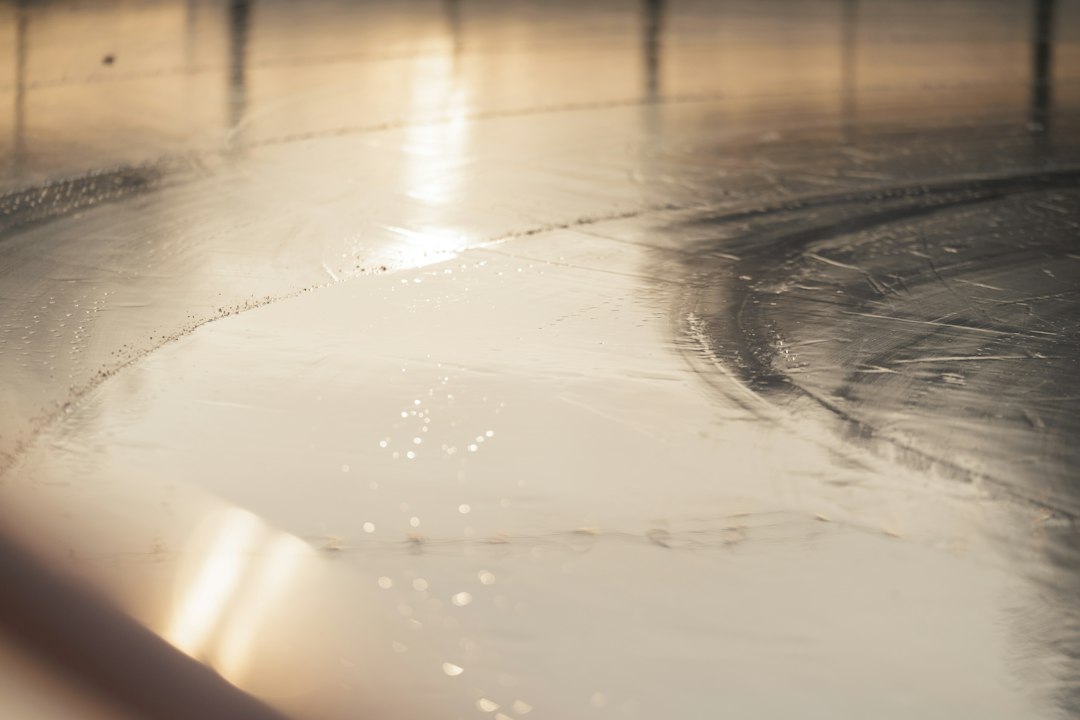
Spill a cup of water near the back wall of a garage and it will take its time, tracing a path that looks random until you notice that it bends around every shallow dip. Water in a garage obeys the slab like a ball on a gentle hill. Learning to read that path explains puddles, damp corners and why a mop bucket tips over in one spot but never in another.
The big tilt and the small ones
The overall pitch runs from the back or sides of the room toward the overhead door. Finishers build it in on purpose, usually a fraction of an inch of drop across several feet. Superimposed on that big tilt are smaller ones: slight crowning in the middle of a panel where the concrete was troweled, low points near saw cuts, and settlement dips where soil under the slab has compacted. Water follows the big tilt in general, then gets diverted into every small low spot it meets.
Melted snow behaves the same way, though it arrives in a different pattern. A vehicle that comes in with a snow-covered body drips along its length, so the water starts in two long lines under the doors and spreads as it moves. Hosed water starts at a point and fans out. Each pattern teaches something about the surface.
Control joints as channels
Garage slabs are cut with shallow joints that guide where cracks form. Those joints are tiny canyons for water. A thin stream often turns and follows a joint for several feet before spilling onto the next panel. If the joint is open, water slips into it, and moisture can reach the soil beneath. If the joint is filled with a flexible sealant, it flows over the top.
This is why joint treatment matters before any coating. An open joint under a coating can telegraph a line of damp or a ridge, and water traveling along it may lift an edge of the finish. Filling the joint with an elastic filler leaves it able to move while stopping water from falling inside.
Where birdbaths form
A birdbath is a shallow depression that holds water after the rest of the floor has dried. It forms when the slab was troweled slightly low, when a panel has rotated a hair, or when traffic wore a dip into a soft patch. A dark ring that appears around the same spot after every wash is a sign. Depth matters: a dip under an eighth of an inch looks like a darker stain as it dries, while a deeper dip holds a visible pool for hours.
- Corners near the garage door are common spots because panels meet there.
- Areas under the car often settle faster because of repeated load.
- Places near downspouts outside the wall can pull moisture into the slab edge.
Using water as a survey tool
No special equipment is needed. Wet the floor evenly with a hose on a quiet afternoon, then watch. Mark the edge of any pool with chalk or painter's tape. Photograph the floor from a low angle, because reflections show the pattern clearly. After thirty minutes, mark the second outline and see where water has crept. The result is a map of the real slope, which is more useful than any guess made from the center of the room.
Repeat on a second day with a different starting point. Results should agree. If they do not, a hidden crack or a vent from the soil beneath may be moving water in odd ways.
What the water map tells you
If every pool clears toward the door, the slab is doing its job and little needs to change. If water collects in the middle of the floor, a leveling patch may be worth doing before coating. If it runs toward the house wall, the slope has reversed, which is a more serious condition: water could be reaching the interior wall base. That calls for a closer look at how the slab meets the foundation and possibly at the grading outside.
Slab edges matter too. Where the garage floor meets the house floor, a small step or threshold usually keeps water from crossing. If that step is missing or worn down, water can slide into the house. A small ramped strip or a short dam of sealant can restore the barrier.
How a coating changes the way water moves
A coating slightly reduces the roughness of the surface, so water can run faster and farther. Bare concrete absorbs a bit and slows spreading. A sealed floor sheds water in sheets, which feels like a small improvement but also carries oil and soap residue across the room. A flake finish with texture slows the sheet slightly and gives wheels and shoes more grip.
Edges matter. Where a coating stops at a wall or a drain, it should end in a crisp, sealed line. If water can slide beneath the edge, it will wick up under the film and cause bubbling. Flexible sealant at the margin blocks it.
Managing water day to day
A squeegee with a long handle and a rubber blade is the best tool. Push standing water toward the door and out onto the apron. Sweep the apron clear, too, since grit there can bounce back in. A floor fan helps dry stubborn patches and prevents rings of mineral deposits from forming. Mop with the floor tilt in mind, working from the high end to the low end so dirty water does not return over clean areas.
- Wet the floor and mark where each pool forms.
- Photograph and measure the depth.
- Fill the joints and cracks that guide the flow.
- Patch any dips that are deeper than an eighth of an inch.
- Squeegee toward the door after each wash.
Water in a garage is not mysterious. It follows the slab and respects its dips, joints and edges. A short survey with a hose gives a detailed view of how the floor really behaves, which is the best preparation for any repair, coating or reorganization.