Home / Cabinet and Shelving Loads on Coated Floors
Cabinet and Shelving Loads on Coated Floors
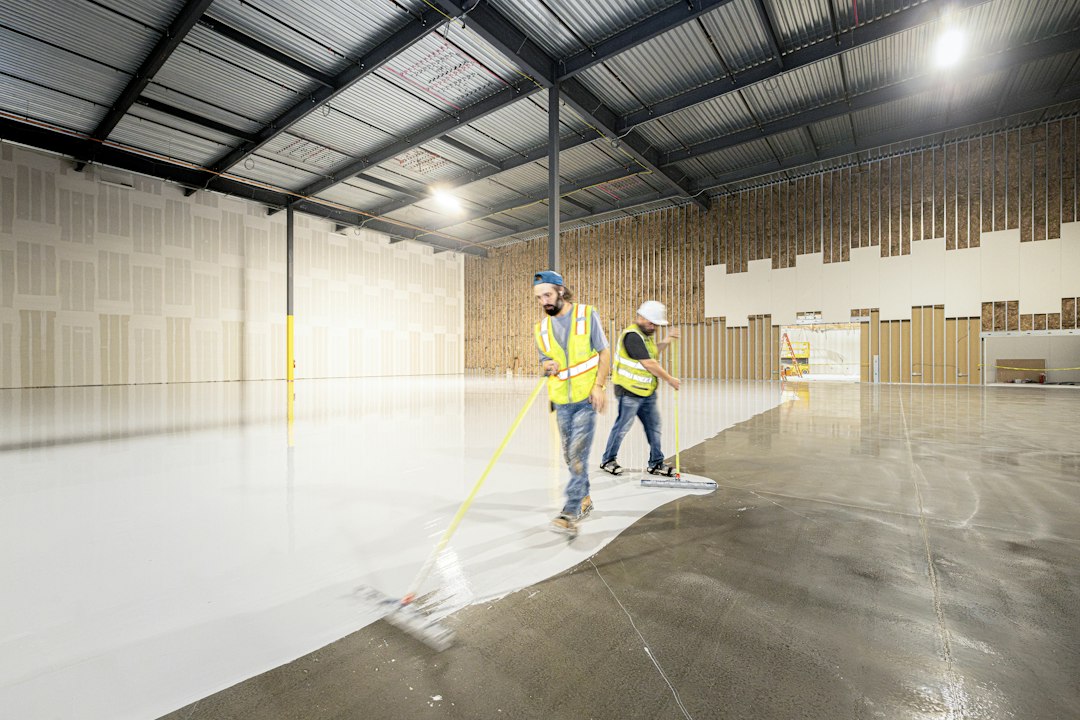
People often ask whether a cured coating can handle a fully loaded steel cabinet. The honest answer is that the coating usually handles the weight; what it may not handle is how that weight is delivered. The difference between a floor that stays flat for years and one that shows four neat dents comes down to contact area, curing time, and the slab underneath.
Weight versus pressure
Weight is the total load. Pressure is the load divided by the area touching the floor. A cabinet weighing several hundred pounds sitting on a full base spreads its load across a large area, and the pressure on the coating is small. The same cabinet on four narrow feet puts the identical load onto a few small patches, and the pressure there climbs sharply. That is why a heavy item on a flat plinth is gentler on a floor than a lighter item on pointed legs.
Cured epoxy is rigid and strong in compression, but it is only a thin film over concrete. The film does not carry load by itself. It transfers the weight to the slab, and the slab, if sound, takes it easily. Dents appear when the film is soft, young or thin, or when the concrete beneath has a weak surface layer that crumbles under concentrated force.
Cure time is part of the load rating
A coating that feels hard to the touch may still be gaining strength. Many systems reach walking hardness in about a day, then continue to cure for several days before they reach full chemical and impact resistance. Placing a loaded cabinet too early can leave permanent marks in a surface that would have shrugged off the same weight a few days later. Cool weather slows the cure, and hot weather can speed it but shortens the working time during application.
The product data sheet lists the intervals for light foot traffic, vehicle traffic and full cure. Follow the longest interval for any heavy storage, and be wary of improvised shortcuts such as running a heater to speed the cure, which can cause blistering.
Types of storage and how they load a floor
- Steel cabinets: heavy, often with adjustable feet or a flat base.
- Wire shelving on casters: moderate weight, but the wheels concentrate force.
- Freestanding wooden shelves: weight varies with contents, usually on four posts.
- Tall tool chests: very heavy, small wheels, often moved occasionally.
- Stacked plastic totes: light, but pressure builds at corners and the bottom edge scuffs.
Each of these behaves differently. A rolling chest that stays put for years can sink into a soft topcoat, while one that is dragged back and forth will scratch it. Totes seem harmless, yet their rough edges slide across the surface and leave hazy lines.
The role of the topcoat
Surface hardness depends mostly on the final layer. A clear polyaspartic or polyurethane topcoat typically resists scratching better than bare epoxy, which can be brittle at the surface and yellow in sunlight. A thicker, harder layer tolerates point loads better than a thin one, though a layer that is too rigid may chip at its edges. Quartz-filled systems offer excellent abrasion resistance at the cost of a rougher texture.
Whatever the product, thickness matters. A coating that was rolled thin to save material may wear through under foot traffic and show dents readily. A floor planned for heavy storage should be specified with that use in mind from the beginning.
Protecting the surface under heavy items
Simple accessories solve most problems. Rubber or plastic pads under each foot enlarge the contact area. A piece of thin hardboard or plywood under a heavy chest distributes its weight further. Casters can be swapped for wider wheels with a softer tread, and a rolling mat under a chest lets the wheels turn without grinding. Felt pads work for light shelving but can trap grit, so they need to be replaced when they look dirty.
Avoid placing rubber items with strong plasticizers on a fresh coating for the first few weeks. Some rubber and vinyl compounds can transfer color or leave a cloudy ring, especially under warm conditions.
The slab underneath
A coating can only be as strong as the concrete it rests on. Weak surface concrete, called laitance, sits on top of some slabs and flakes away under pressure, taking the coating with it. Diamond grinding removes that layer, and a proper vacuum clears the dust. Cracks and joints must be repaired before the coating goes on because a cabinet leg parked on a crack can push one side down and spall the edge.
Moisture also plays a part. If vapor rises through the slab, it weakens the bond and creates soft spots, and the heavy item sits above them like a lid, making the problem worse. Testing moisture before coating, and using a vapor-tolerant primer where needed, avoids the trouble.
Heat and long-term pressure
Coatings soften slightly when warm. In a garage that heats up in summer, a heavy item sitting still for months may leave a faint impression, a bit like furniture marks in a carpet. Choosing a hard topcoat and spreading the load keeps these impressions shallow. Moving a heavy unit a few inches once or twice a year also reduces the chance of a lasting mark, though this is rarely practical for fixed cabinets.
Longer reading
For practical examples of how households arrange and protect garage floors, the longer project articles on allen epoxy flooring corner go through several layouts. Smaller topics, such as leveling feet and wall anchors, have their own dedicated explainers that cover the details of each fixture.
Checklist before loading a cabinet
- Confirm the coating has passed its full cure interval.
- Place pads or a flat plate under every foot or caster.
- Lift, do not drag, when moving shelving into position.
- Level the unit so the load is shared among all contact points.
- Load the cabinet gradually and recheck after a week.
With a sound slab, a fully cured topcoat and a little padding, a cabinet of any ordinary size sits quietly on a coated floor for decades. The coating is not the weak link in that arrangement. The real difference is made by contact area, patience at the cure stage, and care in how the weight is introduced.