Home / Garage Door Thresholds and Seals
Garage Door Thresholds and Seals
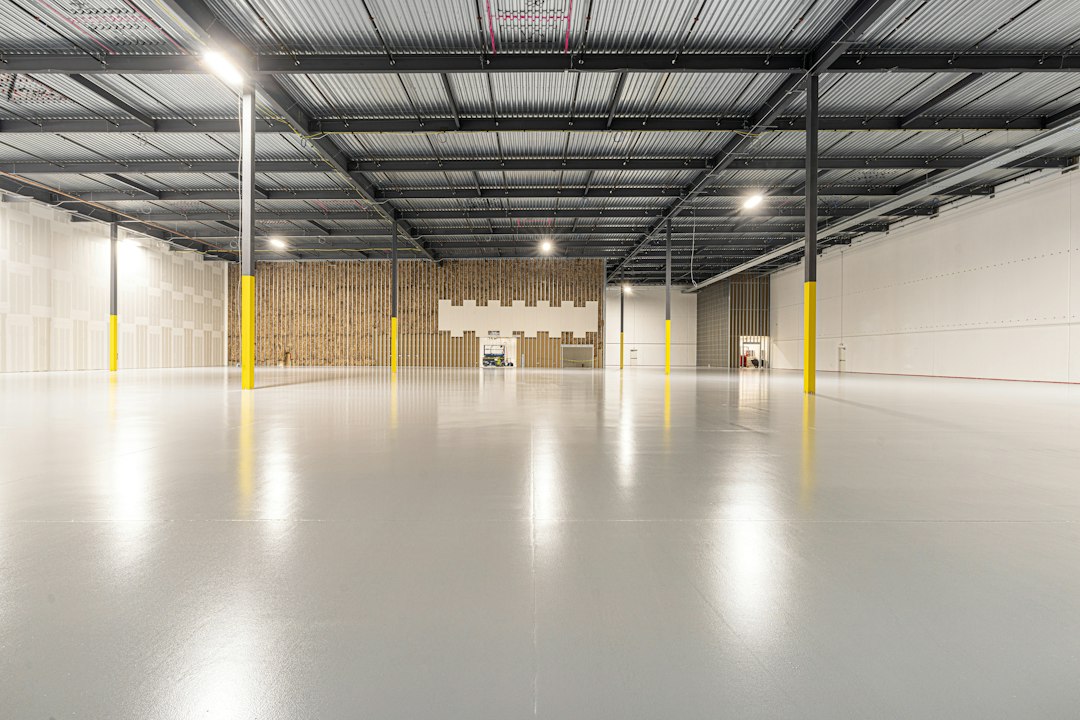
The strip of floor directly beneath a garage door lives a harder life than the rest of the room. It sees sun, wind-driven rain, tire scrub, grit and temperature swings, all in a band only a couple of feet wide. Understanding how that strip gets wet and worn makes it much easier to coat and protect.
How water reaches the threshold
Water arrives from several directions. Rain blown against the door finds gaps along the bottom seal and the sides. Runoff from the driveway pools at the door when the apron slopes toward the building. Cars bring in standing water on their tires and undercarriage, and it drops off right as they stop just inside the door. Hose water used to rinse a vehicle follows the same path. Because the slab typically slopes toward the opening, anything wet in the garage heads to the same place from the inside too.
So the threshold is both an entry point and an exit point for moisture. A coating placed here has to resist water from above, water pushing in from outside, and the vapor that wicks upward from damp soil near the edge of the slab.
What a bottom seal does
The rubber or vinyl strip along the bottom of the door is the first defense. It compresses against the floor when the door closes, blocking wind and small amounts of water. Over the years it hardens, cracks or flattens, and light starts to show beneath the door. Replacement seals come in several profiles, such as a bulb shape and a T or beaded shape that slides into a channel on the door. Matching the profile to the existing track keeps the swap simple.
A seal can only do its job against a floor that is flat. If the slab dips beneath the door, a gap remains, and no amount of rubber closes it. Some homeowners add a raised threshold strip, a low ramp of rubber or aluminum glued to the floor, that gives the seal a high spot to press against. This also creates a small dam that stops water from flowing in, though it adds a trip edge and must be glued firmly.
Wear patterns at the door line
Tires drop grit at the threshold. As the vehicle rolls in, small stones and sand press into the coating and wear it. The sun also bakes the area, since it receives direct light for part of every day. UV breaks down some epoxies, turning them chalky and yellow, which is why a UV-stable topcoat matters at the door edge. Polyaspartic and aliphatic polyurethane topcoats hold their color better than raw epoxy in sunlight.
Salt and de-icer are rare in warm climates but can appear when cars travel to colder regions. Chemicals attack the surface, and standing water on a thin edge speeds the damage. Regular sweeping and rinsing keep the area healthy.
Coating the threshold properly
The slab edge near the door often carries a different texture from the rest of the floor, since it was finished by hand at the end of a pour and may be harder or smoother. Grinding evens it out and opens the surface. Any spalls or chips at the edge should be repaired with a patching mortar before coating. An uneven lip that is simply painted over will break away at the first impact.
- Grind the strip as aggressively as the rest of the floor.
- Fill chips with a patching compound and let it cure.
- Apply primer and body coat in thin, even layers.
- Use a slip-resistant additive because wet tires and shoes meet here.
The point at which the coating ends is a separate design question. It can stop at the inside edge of the door line, extend under the door to the outer edge of the slab, or continue out onto the apron. Each option changes how water behaves and how the seal fits. A dedicated article covers where a coating should terminate.
Keeping the seal and the coating compatible
Some rubber seals leave dark marks on light coatings, particularly when they sit in the same position for months in summer heat. A clear topcoat helps by resisting staining, and a seal made from a different compound, such as vinyl in place of rubber, can solve it. When replacing a seal, cut it to length with a small allowance and install it before the floor is fully loaded with items, so the work does not scratch the surface.
Water intrusion beyond the seal
Sometimes the water is not coming under the door at all. It may be seeping through the joint where the slab meets the apron or the footing, rising through cracks, or leaking in at the sides of the door frame. A simple test is to run a hose on the outside for several minutes while watching from inside, working from low to high. Water that appears at the bottom corners suggests a side problem, while water that shows along the whole width points to the seal or the slab joint.
Fixing the cause outside is almost always more effective than trying to seal the inside. Regrading the apron, adding a trench drain across the driveway, or extending a downspout may be the real solution. The longer project articles on allen epoxy flooring corner describe several versions of this kind of fix.
Seasonal checks
- Inspect the seal each spring and fall for flattening or cracks.
- Look for light visible beneath the closed door during the day.
- Sweep the threshold weekly to remove grit.
- After storms, check for water lines inside the door.
- Reseal exposed joints and recheck the coating edge.
A threshold is a small area with outsized importance. It controls how much weather enters the room and takes the heaviest wear of any strip of floor. Attention to the seal, the surface preparation and the way the coating ends at the opening keeps the entire floor in better condition for longer.
Temperature and the threshold
Rubber and vinyl react to the weather in opposite ways. In a cold snap, a seal stiffens and may stop pressing flat, leaving a thin gap that only closes once the day warms. In a long hot spell, it softens and can take a permanent set, flattened where the door has rested for months. Concrete at the threshold also swells and shrinks a little, so the gap between door and floor is not fixed through the year. A seal with a generous bulb or a double fin tolerates these changes better than a thin flat strip, which is why replacement seals sold for variable climates are often thicker.
Pests and drafts
A gap that admits water also admits leaves, insects, mice and drafts. A tight seal reduces energy loss in a room that adjoins the house, and a garage with a living space above it benefits the most. Run a hand along the bottom edge on a windy day, since moving air is easy to feel. Brush-type seals are used on rough surfaces where a rubber lip cannot make full contact, though they stop pests better than water.